


Eunji’s story: : What's life all about?

1/4/26
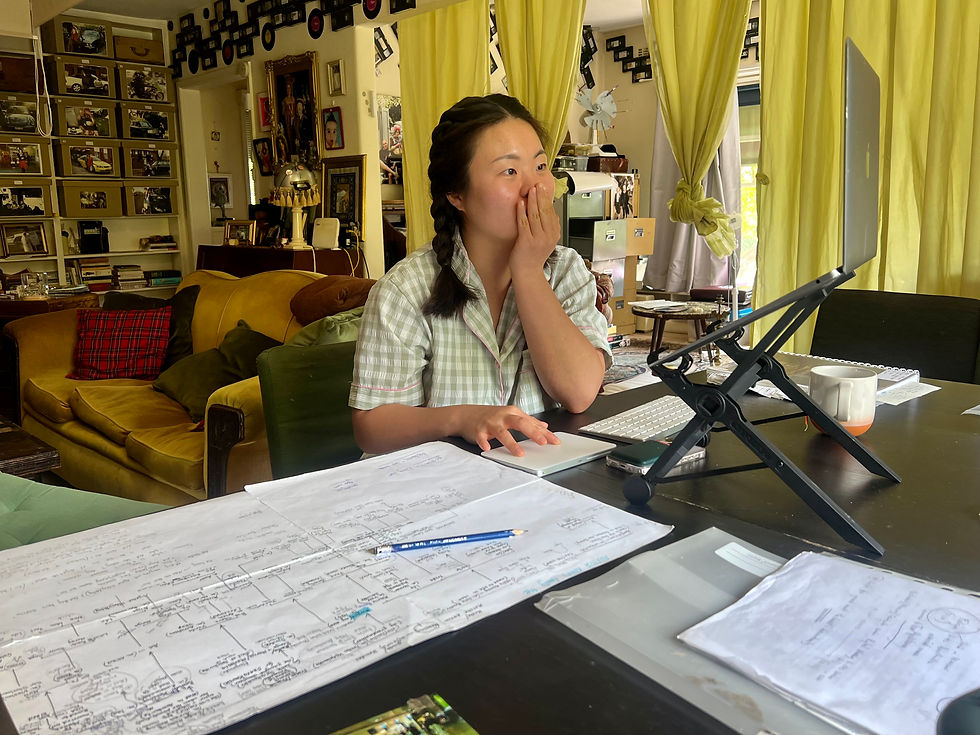
For the past two weeks, I have been translating about 70 letters written in Polish by Jane’s parents, Marysia and Adolek. The letters span fifty years -- from 1949, when they first arrived in Australia, to 1999, when emailing took over handwritten letters. They were sent to Adolek’s sister, Madja, and her husband, Rafal, who had settled in Palestine after WW11.
I used AI to help decipher the handwriting and language, but understanding the stories behind the letters required much more than translation.


I am currently living with Jane, whom I met through the WWOOF organisation, where travellers volunteer at people's homes in exchange for accommodation and meals.
Being here, I've noticed that Jane has a rare ability to transform painful history into art. I've learnt that her parents were Polish Jews who survived Auschwitz and later built a life Australia. For many years, letters were the family’s only way of staying connected.
Meeting Marysia
When I first contacted Jane about staying in her home, she asked if I would occasionally visit her mother, Marysia, who lives in a nearby care facility. At the time, I had no idea how extraordinary Marysia’s life had been.
Although Marysia immigrated to Australia after the war, she never stopped trying to understand the world. She was curious about other cultures and eager to learn from them.

She travelled as much as she could — often solo, so she could feel real freedom and absorb everything in her own time. In 1972, she traveled to ten countries over three months. Drawn to less-travelled destinations: Africa, Russia, Ukraine, Iran and China, she preferred small guesthouses and local markets — a simple meal of fresh bread with cheese and olives, followed by an apple, filled her with happiness.

For decades, she attended Melbourne University, studying Middle Eastern Christianity, to better understand the roots of antisemitism. She also studied Islam, hoping to gain more insight and understanding of the religion. Her interest in multiculturalism led her to the Jewish-Christian-Muslim Association, where she took part in week-long seminars. These were opportunities where people of different faiths could speak openly and learn from one another.

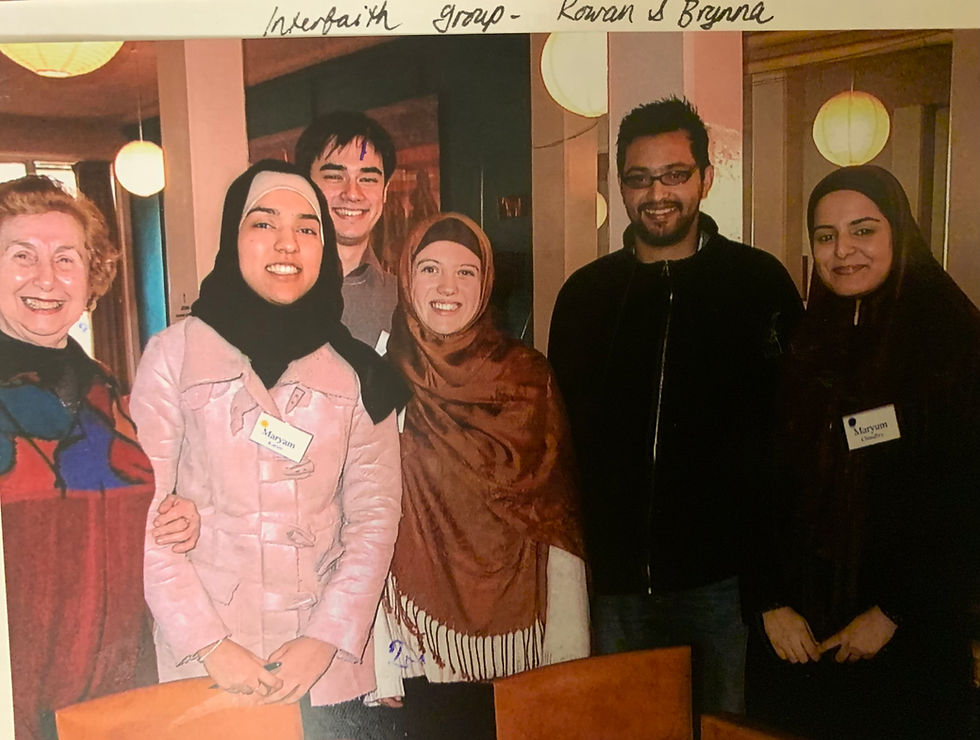

It would be impossible to list everything she has done in her lifetime.
One evening I went to visit Marysia at the aged care home near Jane’s house. It was my first visit, and I felt a little nervous. Jane had shown me what Marysia enjoyed, but I was still unsure.
I put hand cream on her hands and gently massaged them.
‘If you don’t mind,’ she said softly, ‘could you massage my fingers?’
When I pressed her legs she suddenly said, ‘Too strong!’
The woman whose life I had been reading about in letters and books was suddenly sitting right in front of me.
Seeing Marysia also reminded me of my own grandmothers. When I was in my early twenties, both of them lived in nursing homes. My father often encouraged me to visit them, but I rarely did. During those five years, I hardly went at all. I never had a long conversation with them.

They were my family, my own blood, yet I kept a certain distance.
So it felt strangely ironic that I was now sitting patiently beside a very old lady who was not related to me at all.
The letters I translated had been copied and bound into a thick volume. Through them, I could see fragments of history: the changing relationships between Russia, Poland, Germany and Israel, the Gulf War, and the many stories of immigration. Jane often explained the background of the letters to me, but I still felt that I needed to study the history more deeply in order to translate them properly.
Fortunately, Melbourne has both the Jewish Museum of Australia and the Holocaust Museum. When I first visited the Jewish Museum, I struggled to understand many things. I do not have a religion, and I realised how little I knew about religious traditions. Jane recommended that I also visit the Holocaust Museum. That visit helped me understand the history much more clearly.
At the same time, I was also reading a book Jane had written about Marysia’s experiences in Auschwitz. Suddenly, words I had seen in the letters began to make sense — ration, Kindertransport, the yellow star, liberation…
The more I learned about this family, the more I wanted to help Jane with her work. Studying history through real stories was far more interesting than memorising English vocabulary from a textbook.
And if my work could make Jane’s life even a little easier, that would make me happy.
What living with Jane has taught me:
1. What do I show to others?
Jane shared with me a history that stretches back almost a hundred years. She spent time explaining things to someone like me, who knew almost nothing.
So I began to wonder: What have I shared with her?
Perhaps I brought curiosity, and a willingness to learn. But I am not sure whether I shared enough of my own culture.
2. I want to become someone who is easy to live with
One day, Jane told me something that stayed in my mind:
‘If you lived with me, my life would become easier.’
When I lived in Korea, I only wanted to become someone people wanted to work with. Now, I also want to become someone people want to live with — someone who makes a home feel calmer and shares responsibilities naturally.
3. Searching for people I can learn from
I used to think the reason I started a working holiday was simply out of curiosity about how other people live. But recently I realised something else.
Maybe I have been traveling to find people who live the kind of life I admire.
Jane is one of those people. She listens carefully, gives thoughtful advice, cares deeply for her family, writes about her parents, volunteers at a meditation centre, and still opens her home to strangers like me.
This morning I sat on a bench in the garden reading Man’s Search for Meaning, a book Jane gave me as a gift. I had already read it in Korean, but understanding its abstract ideas in English is still difficult. Even so, I keep reading.
While sitting there, I also started thinking about something very practical: what I could prepare for Jane so she might have a proper breakfast instead of skipping it.
I think I’m getting closer to working it out.

Conclusion
Looking at the lives of Marysia and Jane, I was reminded of a line from Contradiction, a Korean novel by Yang Gui-ja: each person’s life takes on the meaning they choose to give it, and how they respond to it.
I am still learning what that means for me. I am beginning to understand that what matters most is how we respond to what happens in our lives. Perhaps it also begins with small things — paying attention, helping where I can, and trying to understand the lives of others more deeply.
Living here, between letters from the past and the quiet routines of the present, I feel that something in me is slowly changing.

Comments